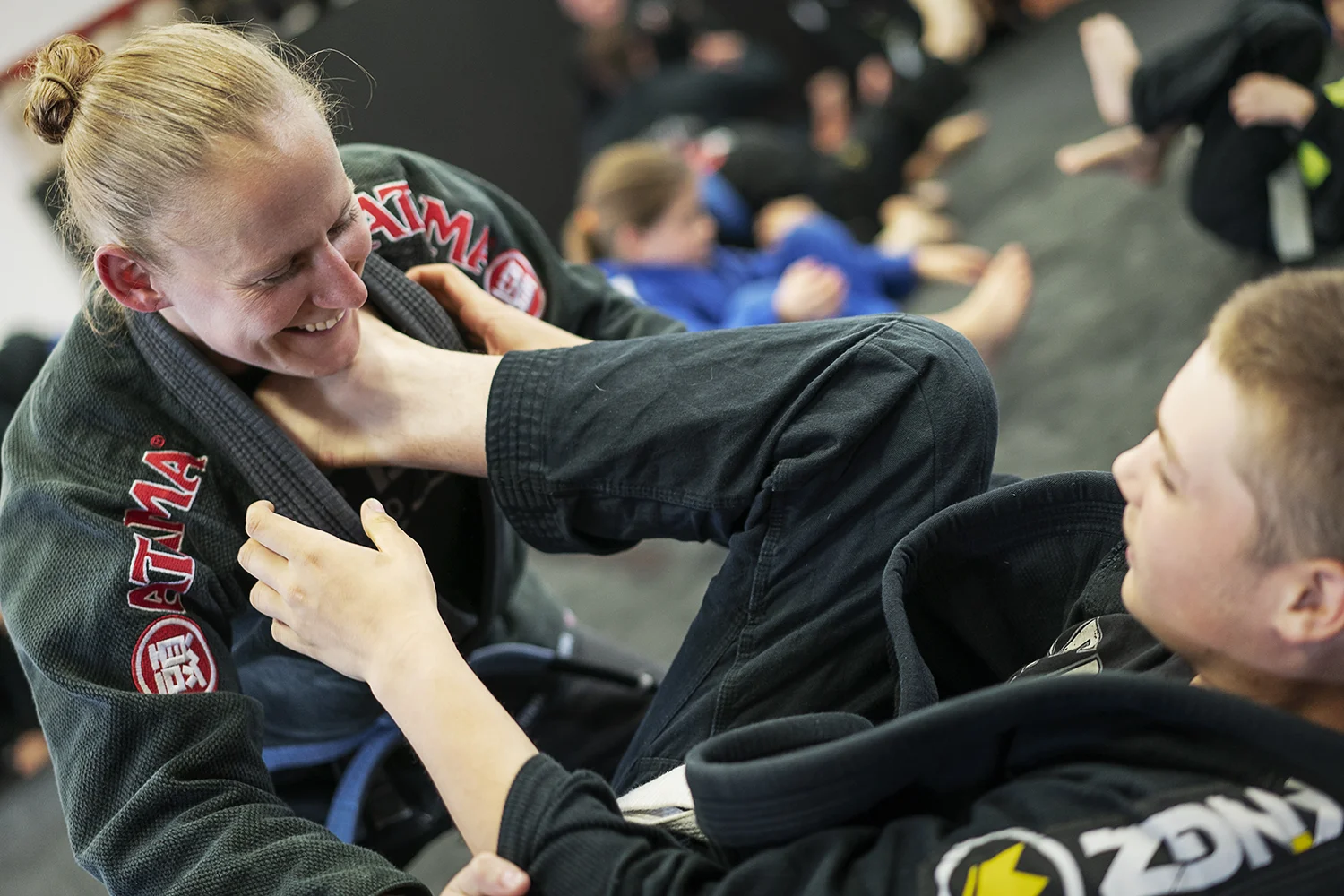
It’s the question every parent asks first, so here’s the straight answer up front: between 5 and 8 is the sweet spot, and it is never too late. Now the honest detail behind that, because your kid isn’t an average — they’re a specific seven-year-old, or a specific twelve-year-old, and the answer shifts a little with each.
Ages 5 to 8: building the operating system
At this age, martial arts isn’t really about martial arts. It’s about following multi-step instructions, taking turns, losing a game without unraveling, and being comfortable with structure that isn’t school. Brazilian Jiu-Jitsu happens to be an outstanding delivery system for all of that because it’s essentially supervised wrestling — the thing young kids already do naturally — with rules, respect, and a coach shaping it.
This is why classes at Victorious are split by age, with the 5–8 group getting instruction tuned to their developmental stage: shorter drills, more games, constant movement. A five-year-old who “does BJJ” is mostly learning to be coachable. That’s the win.
Ages 9 to 13: the confidence years
This is where training starts paying visible dividends, because these are the years when social pressure arrives and self-image sets. Kids in the 9–13 group learn real technique, earn real progress, and — as we wrote about in our back-to-school piece — develop the composure that makes them hard targets and good friends. If your child is ten and has never done a sport, this is a phenomenal on-ramp: grappling doesn’t care whether they can catch a ball.
“Is my kid too old to start?”
No, and this worry gets the math backwards. A twelve-year-old white belt trains alongside other kids, catches up fast, and — if they stay with it — is a dangerous teenager and a lifelong athlete. The only “too late” in jiu-jitsu is never starting. Adults begin at forty every week of the year; your seventh-grader is fine.
How to tell if your child is ready
Forget age for a second and look for three things: can they follow a two-step instruction, can they handle a coach who isn’t their parent, and are they willing to try it twice (the first class is novelty; the second class is the real signal). If you’re two-for-three, they’re ready.
The lowest-risk way to find out
You don’t have to be sure — that’s what a free trial class is for. Classes run at 5 PM every weekday, parents watch from the side, and a trial class is a no-cost way to see how your child takes to it. Whatever their age is right now, it’s a good age. The best time to start was last year; the second-best time is this week.
Book your child a free trial class, or see the kids program first.